Ship integrations faster—no more hand-rolling OAuth flows. The new Omnix PHP and Python SDKs drop into your stack, handle all token work automatically, and expose every public API with type-safe helpers.
TABLE OF CONTENTS
- What is the Omnix PHP & Python SDK?
- Key Benefits of Omnix SDKs
- Supported OAuth 2.0 Workflows
- Database-Agnostic Token Storage
- SDK Auto-Generation
- Resources
- Frequently Asked Questions
What is the Omnix PHP & Python SDK?
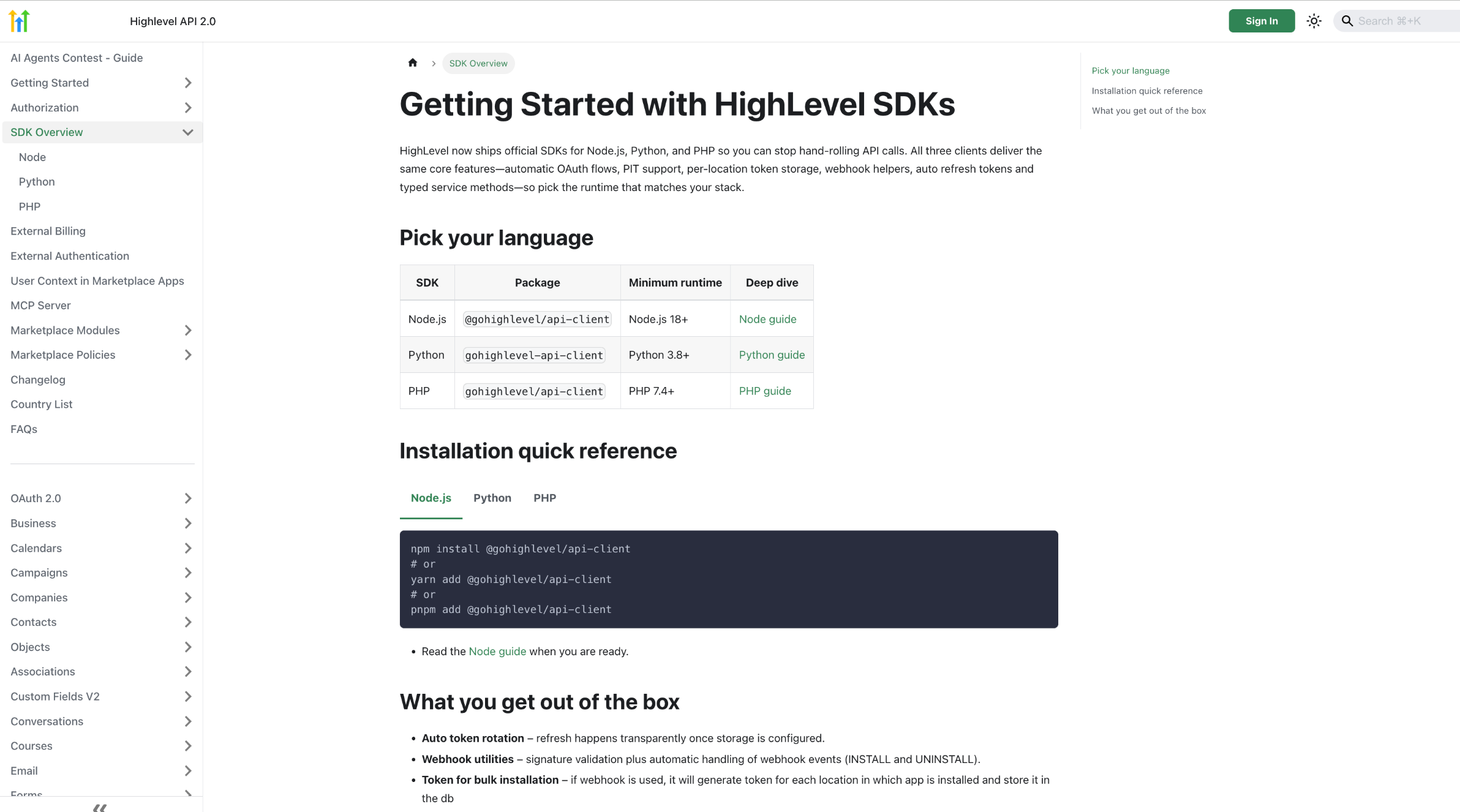
Omnix’s officially supported Omnix/api-client (PHP) and Omnix-api-client (Python) libraries wrap the entire v2 Public API. Each SDK automates OAuth 2.0 token exchange, rotation, uninstall cleanup, and even marketplace bulk-installs—letting you focus on features instead of authentication plumbing.
Key Benefits of Omnix SDKs
- One-line OAuth 2.0: exchange, store, and refresh tokens behind the scenes.
- Database-agnostic session storage adapters (Memory, MongoDB, Redis, MySQL, etc.).
- Webhook helpers validate signatures and process INSTALL / UNINSTALL events automatically.
- Typed service methods for every public endpoint, cutting boilerplate and runtime errors.
- Auto-generated with each API release—your client stays current without manual updates.
Supported OAuth 2.0 Workflows
A flexible token engine covers every installation path developers meet.
- Sub-account installs via the Marketplace “Connect” button
- Bulk agency installs (all locations at once)
- Future auto-installs when new sub-accounts are created
- Daily silent refresh before expiry and graceful uninstall cleanup
Database-Agnostic Token Storage
Pluggable storage adapters keep tokens safe wherever you already persist data. Swap in:
- In-memory cache for local dev
- MongoDB, Redis, MySQL, PostgreSQL, or your own class implementing the storage interface
SDK Auto-Generation
Both clients rebuild automatically from the OpenAPI spec each time Omnix releases new endpoints or fields, so you can update with a simple composer update or pip install --upgrade.
The SDK aims to abstract the complexity of implementing OAuth 2.0 away from developers, fully managing tokens for them across all scenarios.
Resources
1. SDK OVERVIEW
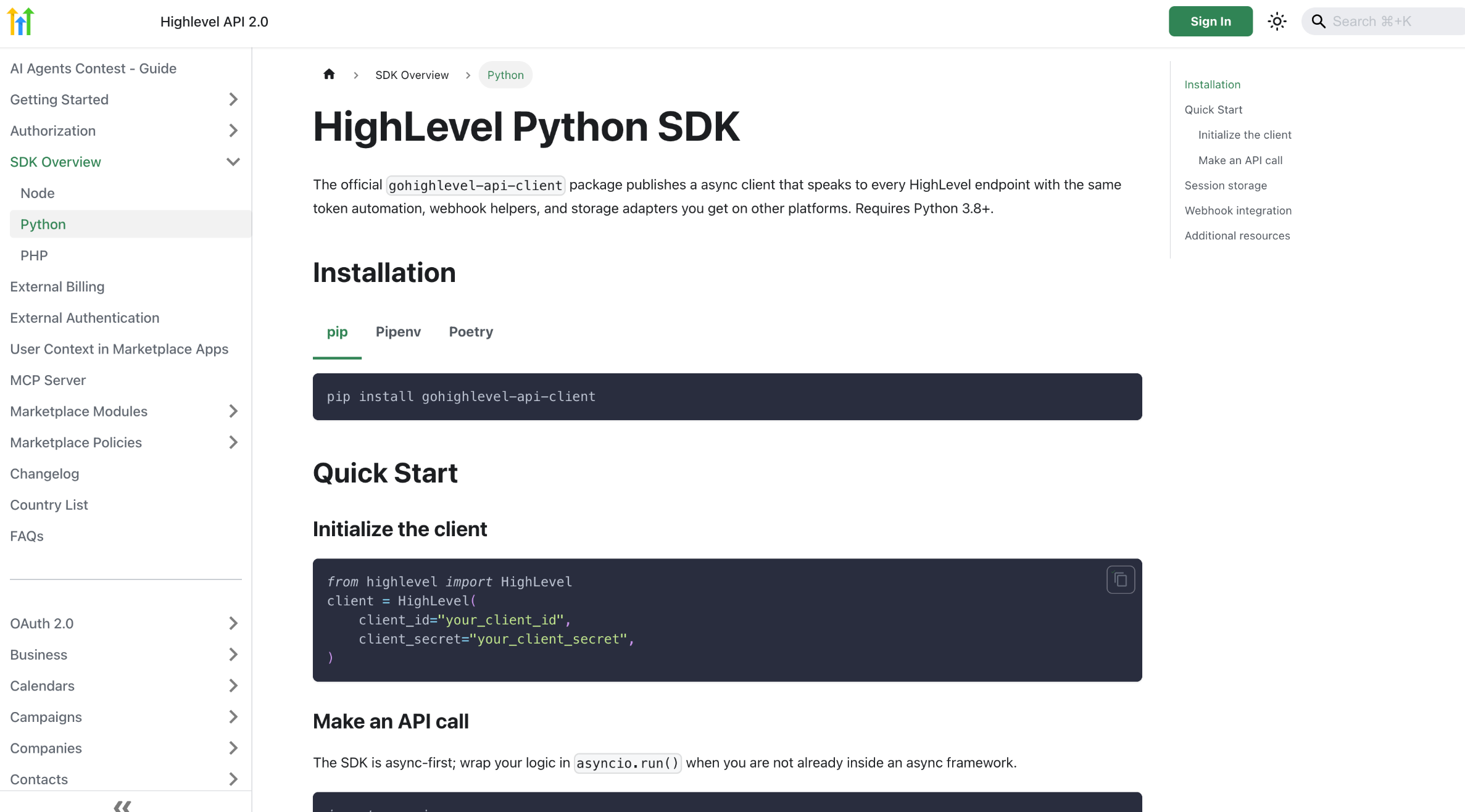
2. PYTHON:
- Omnix Python SDK
- Example Python Project
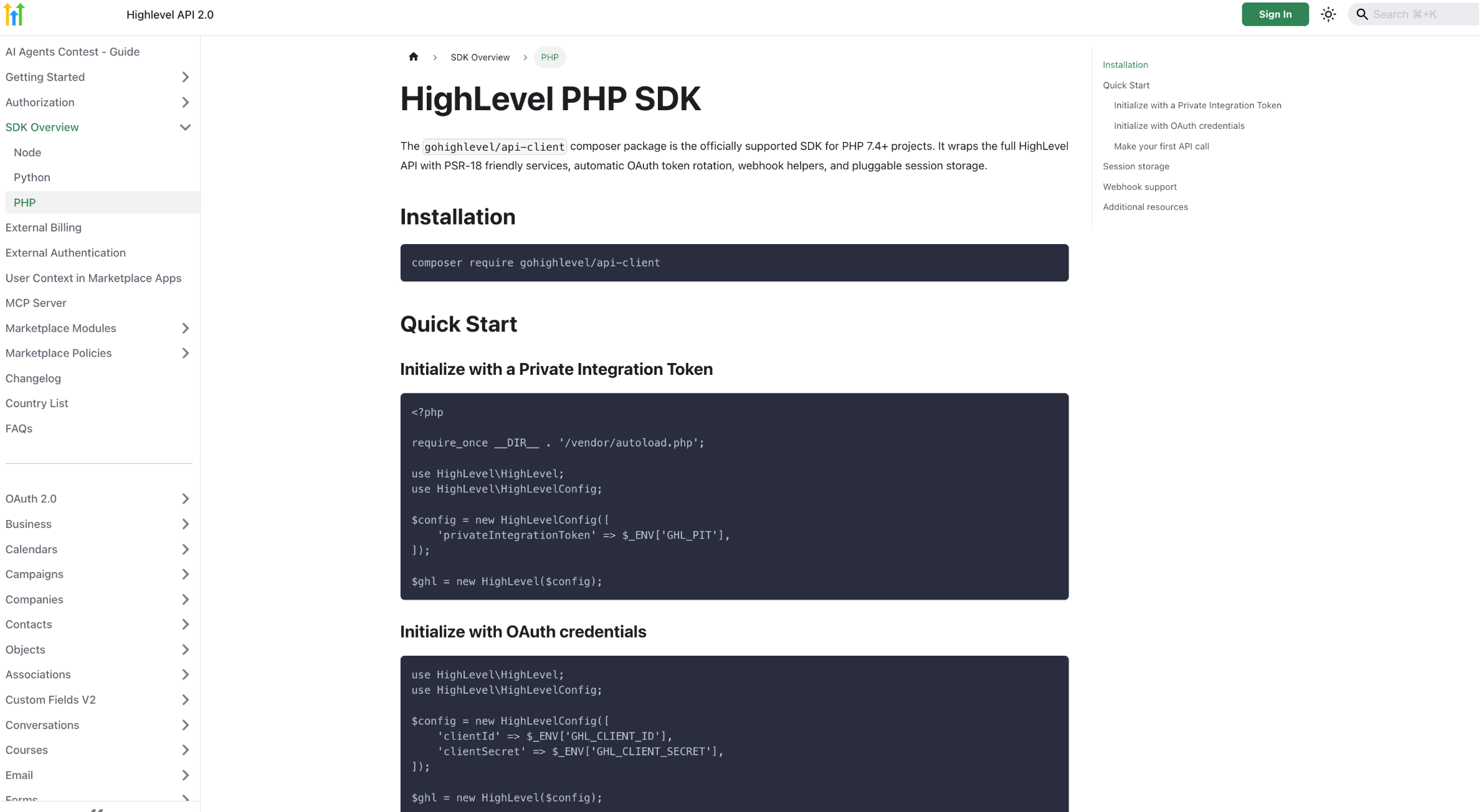
3. PHP:
- Omnix PHP SDK
- Example PHP Project
Frequently Asked Questions
Q: Do I still need to refresh tokens manually?
No. Once session storage is configured, the SDK refreshes tokens silently before they expire.
Q: Can I store tokens in MySQL instead of MongoDB?
Yes. Extend the provided storage base class with your own create/read/update logic.
Q: Does the SDK support Private Integration Tokens (PIT)?
Absolutely—pass privateIntegrationToken when you don’t need OAuth flows.
Q: How do I validate webhook signatures?
Use client.webhooks.subscribe() in Python or getWebhookManager()->verifySignature() in PHP.
Q: Is the SDK compatible with Omnix’s v1 endpoints?
No. The SDK targets Public API v2 only.
Q: Will updates break my code?
New releases are semver-tagged; breaking changes trigger a major version bump so you can pin and upgrade deliberately.